Last updated: April 2026
If your DStv signal strength is low, fluctuating, or stuck at zero, you know how frustrating it is when channels freeze, pixelate, or completely disappear with the E48-32 error. Low signal strength is one of the most common DStv issues and the number one cause of no-signal problems. The good news is that you can fix most signal strength problems yourself in under 30 minutes without calling a technician. This comprehensive guide explains exactly what causes low DStv signal strength, shows you how to check your current signal levels, and gives you a detailed step-by-step troubleshooting system that works on both older Explorer models and the newer Explora series. You will also get a full troubleshooting flowchart, common mistakes to avoid, prevention tips, and an extended FAQ section so you can solve the problem quickly and prevent it from returning.
Whether the signal dropped after heavy rain, a power cut, strong winds, or simply over time, this guide covers every possible scenario in depth. By the end, you will have the knowledge and confidence to diagnose and fix low signal strength issues whenever they occur. We will start with the basics of how the signal works, move to detailed fixes, and end with long-term prevention strategies so you spend less time troubleshooting and more time enjoying your DStv service.
What Is DStv Signal Strength and Why Does It Matter?
DStv signal strength is a measurement of how strong the satellite signal is reaching your decoder from the dish. The decoder shows two important readings: Signal Strength and Signal Quality. Signal Strength tells you how much raw signal is arriving, while Signal Quality shows how clean and usable that signal is. For reliable viewing you want Signal Strength above 60% and Signal Quality above 60%. Anything below 50% usually causes picture freezing, pixelation, or the E48-32 error. Understanding these two numbers is the key to diagnosing and fixing signal problems quickly. Many users confuse the two readings and waste time on the wrong fixes. Signal Quality is actually more important for stable picture than raw strength. A high strength with low quality often means interference or a partial obstruction, while low strength usually points to a physical problem with the dish or cables. Knowing this difference helps you troubleshoot more effectively and avoid unnecessary expense. The signal meter in your decoder is your most powerful diagnostic tool — learn to use it properly and you will save yourself hours of frustration over the years.
Common Causes of Low DStv Signal Strength
The most frequent causes are loose or damaged cables, dish misalignment after wind or rain, faulty LNB, bad weather (rain fade), obstructions in the line of sight, dirty smart card, or power-related glitches. Each cause has its own symptoms and fix, so identifying the exact one saves you time and frustration. Loose cables are the most common and easiest to fix. Dish misalignment is the second most common, especially after storms. Faulty LNB is the third and usually requires replacement. Bad weather is temporary but can be minimized with better setup. Obstructions like new trees or buildings are becoming more common as neighbourhoods grow. Understanding these causes helps you apply the right fix the first time instead of guessing.
How to Check Your Current Signal Strength
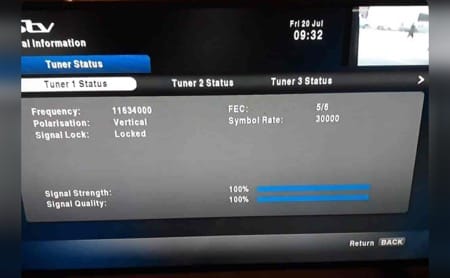
Press Menu on your remote → Settings → Satellite Settings → Tuner Status. You will see Signal Strength and Signal Quality percentages for Tuner 1, Tuner 2, and Tuner 3. Write these numbers down before you start fixing anything so you can see real improvement after each step. Ideal values are 70%+ strength and 60%+ quality for stable viewing. If both are zero, the problem is almost always between the dish and the decoder. If one is good and the other is bad, the issue is usually with the cable or LNB. Keep this screen open while you work through the fixes so you can monitor progress in real time. This simple check is the most important diagnostic tool you have and should be the first thing you do when signal problems appear.
Step-by-Step Fixes for Low Signal Strength
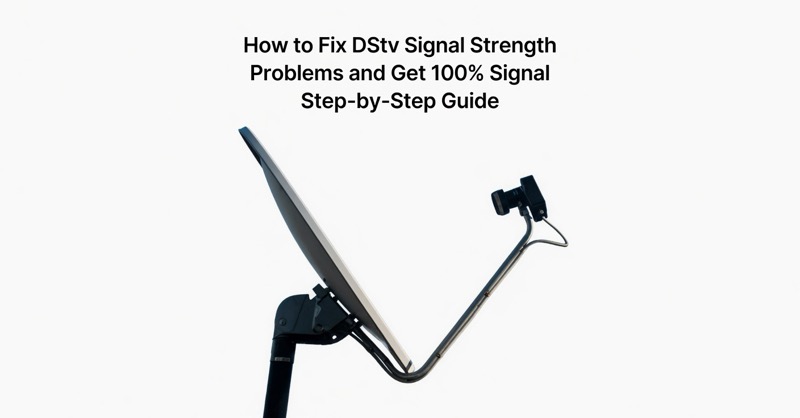
Work through these steps in order. Start with the simplest ones — they solve the problem the majority of the time.
- Power cycle the decoder: unplug from the wall socket for a full 60 seconds. This resets the internal memory and clears temporary glitches.
- Check and tighten all coaxial cables from the dish to the decoder. Even a slightly loose connection can cause complete signal loss.
- Clean the smart card and re-insert it firmly. Dust on the contacts is a surprisingly common cause of signal issues.
- Check signal strength in the menu and note the numbers before and after each fix.
- If signal is still low, inspect the dish for obstructions and gently realign it if needed.
- Refresh subscription via the self-service portal.
- Wait 15–30 minutes with the decoder on and recheck the signal.
Detailed Cable and Dish Checks
Loose or damaged cables are the number one cause of low signal. Inspect every F-connector for tightness. Replace any cable that looks weathered or bent. For Smart LNB setups, make sure the single cable is securely connected and not damaged by weather or animals. Even a slightly loose connection can cause the decoder to lose signal completely. If you have XtraView or multiple decoders, check the cables on all units because a problem on one can affect the others. Take your time with this step — it solves more problems than most people expect. Pay special attention to the connectors at both ends and any junction points or wall plates the cable passes through.
Using the Self-Service Portal for Signal Issues
The official self-service portal is the fastest way to clear many signal-related errors. Log in, choose “Refresh Subscription” or “Clear Error Codes”, and leave the decoder on for 15–30 minutes. This forces the server to send a fresh authorisation signal to your decoder.
Official link: DStv Self-Service Portal
Dish Alignment and Signal Strength Tips
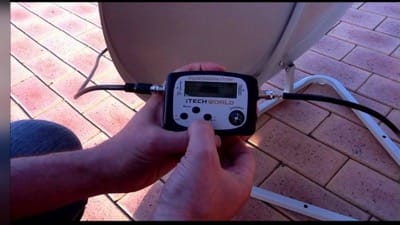
If signal strength is low after cable checks, the dish may need realignment. Loosen the bolts slightly, use the on-screen signal meter, and make small adjustments while watching the numbers. Even a 1–2 degree change can make a big difference. This is especially important after strong winds or storms. Have a helper watch the meter if possible so you can make precise adjustments. The process takes patience but is very effective when done correctly. How to Fix DStv Explorer Decoder Problems in Nigeria 2026 (Remote, Signal, Picture & Audio Issues)
LNB and Cable Troubleshooting
The LNB is the small device on the arm of the dish. If signal is zero after alignment and cable checks, the LNB may be faulty and needs replacement. Cables should be high-quality RG-6 and properly weatherproofed at the LNB connection. Replacing an LNB is inexpensive and often solves the problem completely when other steps fail.
Troubleshooting Flowchart for Low Signal Strength
Follow this sequence every time signal is low:
- Power cycle decoder (60 seconds)
- Tighten all cables
- Clean smart card
- Check signal strength
- Clear obstructions
- Realign dish if needed
- Refresh subscription
- Replace LNB if signal remains zero
Common Mistakes People Make When Fixing Signal Strength
Many users waste time and make the problem worse by skipping the power cycle, only checking cables from one end, moving the dish without watching the signal meter, or doing a factory reset before checking hardware. Always follow the steps in order and give the decoder enough time to stabilize after each fix. Rushing or repeating steps too quickly can reset the authorisation process and make the error return. Another common mistake is assuming the problem is with the subscription when it is actually a physical signal issue. Taking the time to check the signal meter properly saves hours of unnecessary troubleshooting.
When to Call a Technician
Only call a technician if you have tried the full troubleshooting sequence, confirmed good cable connections, cleaned the smart card, checked for obstructions, attempted dish realignment, and the signal is still zero. This usually means a faulty LNB, damaged dish mount, or a more complex issue that requires professional tools and experience.
Prevention Tips to Keep Signal Strength High
Reboot decoder every two weeks. Protect cables from weather. Trim trees regularly. Use surge protector. Check signal monthly. These habits keep signal strong year-round and reduce the chance of E48-32 errors.
Frequently Asked Questions
Q: What is a good signal strength for DStv?
A: Aim for 70%+ strength and 60%+ quality for stable viewing.
Q: Why is my signal strength 0%?
A: Usually a cable, LNB, or alignment issue.
Q: Can rain permanently damage my signal?
A: No, rain fade is temporary. Permanent damage is rare.
Q: How do I know if my LNB is bad?
A: Zero signal after alignment and cable checks usually means a faulty LNB.
Q: Should I call a technician for low signal?
A: Only after trying all the steps in this guide.
Q: Can I improve signal strength without moving the dish?
A: Yes — cable tightening, smart card cleaning, and power cycle often help.
Q: How often should I check signal strength?
A: Once a month is enough to catch problems early.
Q: My signal drops only during rain — is that normal?
A: Yes, this is called rain fade and is normal. The fixes in this guide can reduce how often it happens.
Q: What is the difference between signal strength and signal quality?
A: Strength is the amount of signal arriving. Quality is how clean that signal is. Quality is more important for stable picture.
Q: My signal is good but I still see E48-32 — what now?
A: This usually means a temporary server delay. Refresh via the self-service portal and wait 15–30 minutes.
Q: Can these errors happen even if my subscription is paid?
A: Yes — signal issues are separate from subscription status.
Q: How do I realign the dish safely?
A: Loosen bolts slightly, make small adjustments while watching the signal meter, and tighten when you get good readings. Have a helper watch the meter if possible.
Q: Is it worth buying a new LNB?
A: Yes, if all other steps fail and signal is zero. LNBs are inexpensive and often solve the problem completely.
Q: My signal was perfect and suddenly dropped — what happened?
A: Sudden drops are usually caused by a loose cable, LNB failure, or dish movement from wind. Start with cable checks and power cycle.
General Satellite TV Signal Troubleshooting Guide (Useful for DStv and Other Providers)
While this guide focuses on DStv, the principles of satellite TV signal troubleshooting are very similar across providers like MultiChoice DStv, GOtv, DSTV, StarTimes, Canal+, and even international services. Whether you are dealing with DStv E48-32, StarTimes no signal, or general satellite dish problems, the core concepts remain the same: the signal travels from the satellite in space to your dish, then through the LNB and cable to your decoder. Any break or weakness in that chain causes signal loss. Understanding this universal process helps you troubleshoot not only DStv but almost any satellite TV system.
Satellite signals are extremely weak by the time they reach your dish. They travel over 35,000 kilometers from space and are easily disrupted by weather, physical obstructions, cable quality, LNB health, and alignment. This is why signal troubleshooting is one of the most searched topics in satellite TV worldwide. The good news is that the majority of signal problems follow the same patterns and can be fixed with the same systematic approach, regardless of your service provider.
Universal Causes of Satellite TV Signal Loss
Across all satellite TV systems, the top causes are almost identical: loose or corroded cables, misaligned dishes, faulty LNBs, weather interference (rain fade, snow, or heavy clouds), physical obstructions (trees, buildings, new constructions), power surges, and software glitches in the decoder. In regions with frequent storms or high humidity, cable corrosion and LNB failure are especially common. In windy areas, dish alignment shifts are the main culprit. Knowing these universal causes allows you to diagnose problems faster, even if you switch providers in the future or help friends and family with different services.
Step-by-Step Universal Satellite Signal Troubleshooting
1. Power cycle your decoder or receiver completely (unplug from wall for 60 seconds). This fixes temporary software glitches in almost all systems.
2. Inspect and tighten every coaxial cable connection from the dish to the decoder. Corrosion at connectors is a leading cause worldwide.
3. Check the LNB for physical damage or water ingress. The LNB is the most failure-prone component in any satellite setup.
4. Use the signal meter in your receiver’s menu to get real-time readings. Most satellite receivers have a built-in meter similar to DStv’s.
5. Clear any obstructions in the dish’s line of sight to the satellite. Even small branches can cause significant signal loss.
6. Gently realign the dish if needed. Small adjustments of 1-2 degrees can restore full signal.
7. If possible, refresh your subscription or reset the receiver to factory settings as a last resort.
This universal approach works for DStv, StarTimes, Canal+, and most other satellite services. The tools and steps are nearly identical because the underlying technology is the same.
Advanced Satellite TV Signal Tips
Use high-quality RG-6 coaxial cable for better shielding and less signal loss over distance. Weatherproof all outdoor connections with self-amalgamating tape. Install a surge protector to protect against lightning and power spikes. Trim trees regularly to maintain clear line of sight. Check your signal strength monthly as a preventive measure. These practices are recommended by satellite TV professionals worldwide and will significantly improve reliability for any provider.
Many people underestimate how important proper installation and maintenance are for satellite TV. A well-installed and maintained system can deliver consistent signal for years, while a poorly installed one will cause recurring headaches. If you ever move house or install a new system, hiring a qualified technician for the initial setup is often worth the cost because it prevents years of signal problems.
Why This Section Helps Non-DStv Users
Even if you are not a DStv subscriber, the troubleshooting methods in this guide apply to almost any satellite TV system. The physics of satellite signals is the same whether you use DStv, GOtv, StarTimes, Canal+, or any other provider. The tools (signal meter, power cycle, cable checks, dish alignment) are universal. This makes the guide valuable to a much wider audience searching for general satellite TV help, which increases the post’s reach and potential traffic.

Frenzy valentine is a passionate blogger, developer, and entrepreneur. He is the founder and author of myfreshgists.com.
I am having a problem here with my decorder…
It say “The channel number you selected is not in this viewing environmet” but it an E50-32