A frozen screen, missing channels, or a receiver stuck on “Acquiring Satellite Signal” are usually fixed with one simple step: a hard reset. It clears out temporary software glitches without touching your recordings or account settings, and it takes only a few minutes.
This guide covers how to reset a standard Dish receiver, how the process differs if you have a Hopper and Joey system, and what to try if a basic reset doesn’t solve the problem.
What a Hard Reset Actually Fixes
A hard reset clears the receiver’s short-term memory, which is often enough to resolve frozen video, missing audio, unresponsive remotes, and a receiver that won’t move past the startup screen. It does not erase your recorded shows or your account details, since those are stored separately from the temporary system data a reset clears out.
What it won’t fix is a hardware failure, a damaged cable, or an actual satellite signal problem caused by weather or dish alignment. If a reset doesn’t help at all, that’s a sign the issue lies somewhere else in the system. Step by Step How To Program Dish Network Remote & fixes
How to Hard Reset a Standard Dish Receiver
Unplug and Restart
Locate the power cord at the back of the receiver, usually marked with a red tag for easy identification. Unplug it directly from the wall outlet rather than switching off a power strip, since some strips don’t fully cut power to the unit.
Wait 10 seconds, then plug the receiver back in. This short pause is enough for the internal components to fully discharge before restarting, and waiting longer doesn’t speed anything up.
Use the Reset Button Instead
If you’d rather not unplug anything, most receivers have a physical reset button on the front panel, sometimes hidden behind a small drop-down door. Press and hold it for about 5 seconds, then release. This triggers the same reset as unplugging the unit, without needing to touch the power cord at all.
What Happens During the Reset
After the receiver powers back on, you’ll typically see a message reading “Acquiring Satellite Signal,” followed by “Downloading Program Guide.” The full process can take up to 5 minutes to complete, so give it that long before assuming something went wrong.
You can press Select on the remote to skip the program guide download, but if you’ve been seeing “No Information Available” or incorrect show times in your guide, letting the download finish fully usually clears that up for good.
Resetting a Hopper and Joey System
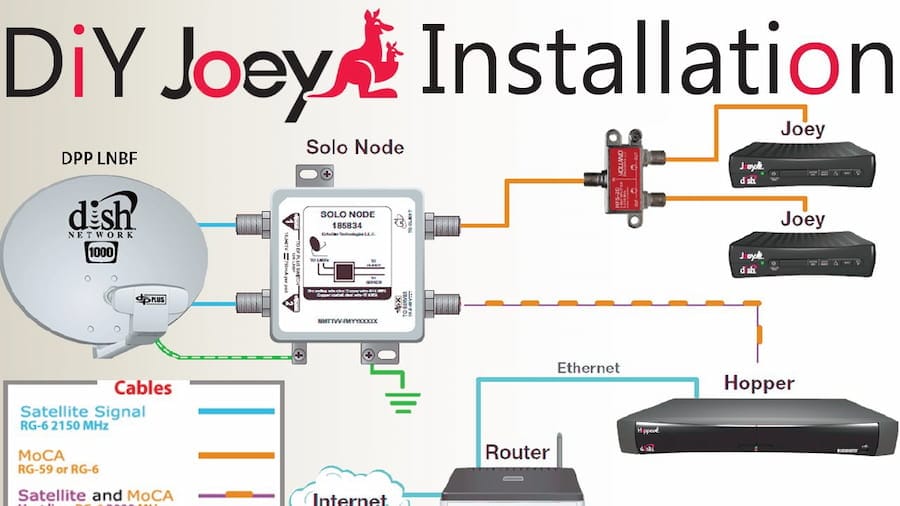
If your setup includes a Hopper along with one or more Joey receivers in other rooms, the order you reset them in matters. Always reset the Hopper first, wait for it to fully come back online, and only then reset any Joeys connected to it.
Resetting a Joey before its Hopper is back up is one of the most common reasons a reset appears to fail, since the Joey has nothing to reconnect to yet. Once the Hopper shows live TV again, unplug each Joey for 10 seconds or hold its front panel button for 5 seconds, the same way you would with the main receiver.
Resetting Remotely With the DISH Anywhere App
If your Hopper is connected to the internet, you can trigger a reset without touching the hardware at all. Open the DISH Anywhere app and sign in, then go to More, then Settings, then My Receivers, then Receivers, and select Reset next to the unit you want to restart.
This option is especially useful if the receiver is in a hard-to-reach spot, or if you want to try a reset before heading home to check on it in person.
If a Hard Reset Doesn’t Fix the Problem
When a reset doesn’t resolve the issue, check the basics before assuming the receiver itself has failed. Confirm that all coaxial and HDMI cables are firmly connected at both ends, and that the TV is set to the correct input.
If your remote isn’t responding even after the reset, it may simply be paired to a different receiver in a multi-room setup. Press Locate Remote on the receiver you’re trying to control. If the remote in your hand doesn’t beep, try the same button on your other receivers until you find the one it’s actually paired to.
A blinking power light after a reset usually means the receiver is in recovery mode, which can take up to 4 hours to finish on its own. If the light has been blinking for longer than that, or if these steps still leave you without a picture, that’s the point where contacting Dish support directly makes more sense than continuing to troubleshoot alone.
Most Dish receiver problems clear up with a simple reset, and knowing the right order for Hopper and Joey systems solves the cases that a basic unplug alone can’t fix. Keep the 10 second and 5 minute timing in mind rather than guessing, and reach for the DISH Anywhere app when the receiver isn’t convenient to reach physically. For step-by-step video walkthroughs and additional troubleshooting by error code, Dish’s official Hopper troubleshooting page is the most reliable place to check next.

Frenzy valentine is a passionate blogger, developer, and entrepreneur. He is the founder and author of myfreshgists.com.
These procedures did not reset the receiver.