While headlines scream that oil companies are raking in massive profits from the ongoing Iran crisis, the truth is far more nuanced. The recent escalation in the Strait of Hormuz, followed by the sudden pause of Project Freedom, has created a clear divide among the world’s biggest energy players. Some oil giants are indeed seeing record revenues, but many others are facing rising costs, squeezed margins, disrupted supply chains, and long-term uncertainty. This detailed analysis reveals why not all oil giants are prospering from the Iran war in 2026, examining the winners, the losers, and the complex factors at play in today’s volatile energy market.
The Uneven Impact of the Iran Crisis on Global Oil Companies
The Iran conflict has sent oil prices swinging wildly, with Brent crude briefly surging above $100 per barrel before dropping sharply after President Trump announced the temporary pause in Project Freedom. At first glance, higher prices should benefit every oil producer, but the reality is that different segments of the industry are affected in completely different ways. Upstream exploration and production companies with strong domestic assets in the United States have largely benefited from the price spike. However, integrated majors with heavy exposure to international refining, shipping, and Middle East operations have seen their profits eroded by higher input costs and logistical nightmares. This split explains why not all oil giants are prospering from the Iran war despite the headline price increases.
Clear Winners: U.S. Shale Producers and Domestic-Focused Companies
American shale operators have emerged as some of the biggest beneficiaries of the crisis. Companies like ExxonMobil, Chevron, and independent Permian Basin producers have significant production in the United States that is not dependent on the volatile Strait of Hormuz shipping routes. When oil prices climbed rapidly in March and April 2026, these firms locked in higher revenues on every barrel pumped from their domestic wells. Many shale companies had already hedged a large portion of their output at prices above $80 per barrel, meaning the price surge translated directly into windfall profits. For these players, the Iran war has provided a short-term boost without the same level of supply chain disruption that has plagued international operators. Analysts note that U.S. shale production has remained resilient, helping to offset some of the global supply fears and keeping the market from spiraling completely out of control. Oil Prices Crash as Trump Pauses “Project Freedom” in the Strait of Hormuz
The Big Losers: European Majors and Refining-Heavy Giants
On the other side of the ledger, European oil majors such as Shell, BP, and TotalEnergies have been hit particularly hard. These companies operate large refining businesses that buy crude on the open market and sell finished products like gasoline, diesel, and jet fuel. When crude prices rise faster than product prices—a situation known as a negative crack spread—refining margins collapse. In the current environment, several of these companies have reported significantly lower quarterly margins than expected. At the same time, their international upstream operations in the Middle East have faced higher insurance costs and shipping delays caused by the crisis in the Strait of Hormuz. Rerouting tankers around Africa has added weeks to delivery times and increased fuel expenses dramatically. This combination of squeezed refining profits and elevated logistics costs means that not all oil giants are prospering from the Iran war, even as crude prices remain elevated.
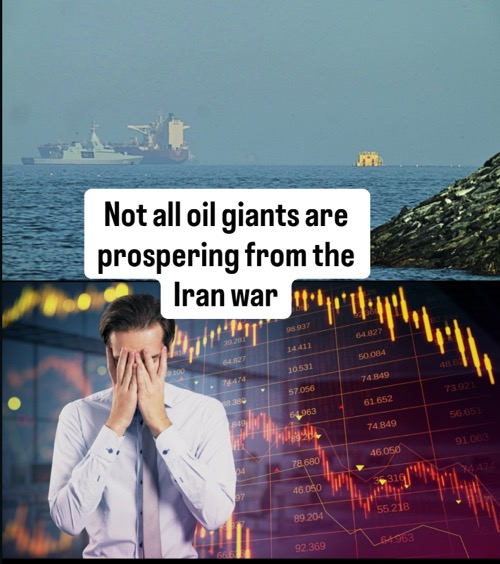
Shipping and Tanker Operators Face Severe Pressure
One of the most affected sectors has been the shipping industry that supports the oil trade. Tanker companies and integrated oil firms with large fleets have seen war-risk insurance premiums skyrocket. Daily charter rates for vessels initially surged as companies scrambled to secure capacity, but the pause in Project Freedom caused rates to collapse almost overnight as traders bet on a quick resolution. The uncertainty has made it extremely difficult for shipping operators to plan long-term contracts or maintain steady cash flow. For oil giants that rely on their own tanker fleets or long-term charters, these disruptions have added millions of dollars in unexpected costs. This is another key reason why the benefits of the Iran war have been unevenly distributed across the industry.
Refining Margins Under the Microscope
Refining is one of the most sensitive parts of the oil value chain during geopolitical crises. Refiners purchase crude oil and convert it into higher-value products. When crude prices jump faster than the prices of gasoline, diesel, and other distillates, the profit margin on each barrel processed shrinks or turns negative. In the wake of the Iran conflict, several major refining-heavy oil companies have warned investors about compressed margins in their quarterly reports. This phenomenon is not new, but the speed and scale of the recent price movements have made it particularly painful for companies with large refining footprints in Europe and Asia. Meanwhile, pure-play upstream companies with minimal refining exposure have been largely insulated from this pressure, highlighting once again why not all oil giants are prospering from the Iran war.
Long-Term Strategic Implications for the Industry
Beyond the immediate financial impacts, the Iran crisis is forcing oil companies to rethink their global strategies. European majors with significant investments in the Middle East are now accelerating diversification efforts, looking for more stable production in the Americas and Africa. Some are also increasing investments in renewable energy and low-carbon projects to reduce their exposure to geopolitical risk in oil-producing regions. U.S. companies, on the other hand, are using the current price strength to expand shale operations and build cash reserves for future downturns. The pause in Project Freedom has bought some breathing room, but few executives believe the underlying tensions in the region have been resolved. This uncertainty is prompting a broader reassessment of capital allocation across the sector.
Investor Perspectives and Market Reactions
Wall Street analysts have been busy updating their ratings and price targets in response to the crisis. Companies with strong U.S. shale assets and limited refining exposure have generally seen their stock prices hold up better or even rise. In contrast, European integrated majors have faced downward pressure as investors worry about sustained margin compression and higher operating costs. Energy exchange-traded funds have shown mixed performance, with some focused on upstream producers outperforming those weighted toward refining and shipping. The Iran war has served as a reminder that geopolitical events create winners and losers within the same industry, and investors are paying close attention to which companies have the most resilient business models.
Broader Economic and Geopolitical Context
The uneven impact on oil giants reflects larger shifts in global energy security. The Strait of Hormuz remains one of the most critical chokepoints for world oil trade, and any disruption there ripples through economies worldwide. While the temporary pause in Project Freedom has eased some immediate market fears, the underlying risks have not disappeared. Countries and companies are now accelerating efforts to diversify supply sources, build strategic reserves, and invest in alternative energy pathways. For the oil industry, this means a period of heightened volatility where traditional assumptions about price and profit no longer apply uniformly. The crisis has accelerated the push toward greater energy independence in many regions, which could reshape the competitive landscape for years to come.
What Companies Are Doing to Adapt
In response to the current challenges, many oil giants are taking concrete steps to protect their businesses. Some are renegotiating long-term supply contracts, hedging more aggressively against price swings, and accelerating digital transformation projects to improve operational efficiency. Others are exploring joint ventures or divestitures to reduce exposure to high-risk regions. Refining-heavy companies are particularly focused on optimizing their asset portfolios and improving crack spreads through better crude selection and product mix strategies. These adaptation efforts will determine which companies emerge stronger once the current tensions in the Middle East eventually subside.
The Human and Environmental Angle
Beyond the financial numbers, the Iran crisis has also highlighted the human and environmental costs of geopolitical conflict in energy markets. Shipping disruptions have affected not only oil but also other critical commodities, impacting global supply chains and consumer prices. Environmental groups have raised concerns about increased tanker traffic and the risk of accidents or spills in sensitive marine areas. For the oil industry, these broader considerations are becoming harder to ignore as stakeholders demand greater transparency and accountability in how companies manage geopolitical risks.
The Iran war has demonstrated that not all oil giants are prospering equally from the conflict. While some U.S.-focused producers have enjoyed higher revenues, many international majors, refiners, and shipping companies have faced significant headwinds from rising costs and disrupted operations. As the situation in the Strait of Hormuz continues to evolve, the winners and losers within the energy sector will become even clearer. For now, the crisis serves as a powerful reminder that in today’s interconnected world, geopolitical events can create highly uneven outcomes even within the same industry. Investors, executives, and policymakers will be watching closely to see how the major oil companies navigate this challenging period and position themselves for whatever comes next.

Frenzy valentine is a passionate blogger, developer, and entrepreneur. He is the founder and author of myfreshgists.com.