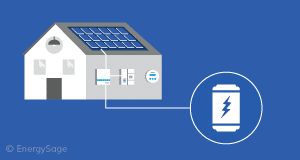
Building a reliable solar power system comes down to four core components working together: the solar panels, the charge controller, the battery bank, and the inverter. Get any one of them wrong, or badly matched to the others, and the whole system underperforms or fails early. This guide explains what each part does, the main choices you will face, and how to pick components that actually work well together.
Whether you want backup power for when the grid fails or a full off-grid setup, understanding these components first will save you money and frustration, since the most common causes of a disappointing solar system are mismatched or undersized parts rather than faulty ones.
Solar Panels
Solar panels are the starting point of the system. They convert sunlight into direct current (DC) electricity using photovoltaic cells, and the more panel capacity you install, the more power your system can generate on a sunny day. Panel capacity is measured in watts, and total system size is usually described in kilowatts.
The Three Main Panel Types
Most panels are made from silicon in one of three forms, and the difference matters for both cost and performance. Monocrystalline panels are the most efficient and space-saving, making them the best choice where roof or ground space is limited, though they cost more. Polycrystalline panels are slightly less efficient and cheaper, offering a reasonable middle ground. Amorphous or thin-film panels are the least efficient and are rarely used for home systems, since they need far more space for the same output.
For most home installations, monocrystalline panels are now the default choice, since their prices have fallen considerably and their higher efficiency means fewer panels are needed for the same result.
Charge Controller
The charge controller sits between the panels and the battery, and its job is to regulate the flow of power into the battery so it charges safely. Without one, panels can overcharge and permanently damage a battery bank. It is one of the most important components for battery lifespan, and also one that people most often buy wrong.
PWM vs MPPT Controllers
There are two types, and the difference has a real effect on how much of your solar power you actually keep. PWM controllers are the older, cheaper, simpler technology. They work by pulling the panel voltage down to match the battery, which wastes energy whenever the panel voltage is higher than the battery voltage. They are only a sensible choice for very small systems, typically under 400 watts, where the panel and battery voltages closely match.
MPPT controllers are the smarter, more efficient option. They actively track the panel’s optimal operating point and convert excess voltage into usable charging current, harvesting roughly 15 to 30 percent more energy than a PWM controller from the same panels. For any system above 400 watts, an MPPT controller is worth the extra cost, since the energy it recovers pays back the price difference within months. It also allows higher-voltage panel strings, which means thinner, cheaper cabling over long runs.
Sizing a Charge Controller
To size an MPPT controller, divide your total panel wattage by your battery bank voltage to find the current it must handle. For example, a 3,000 watt array on a 48 volt battery bank produces about 62 amps, so you would choose a 60 or 80 amp controller. Always check that your panel string’s open-circuit voltage does not exceed the controller’s maximum input rating, remembering that cold mornings can push panel voltage 10 to 15 percent above its rated figure.
Solar Battery
The battery bank stores the energy your panels produce during the day so you can use it at night or during a grid outage. Battery capacity, measured in amp-hours or kilowatt-hours, determines how much energy you can store and how long your system runs without sun.
Lead-Acid vs Lithium Batteries
The two main battery choices today are lead-acid and lithium, and they suit different budgets and priorities. Lead-acid batteries, including sealed AGM and gel types, are cheaper upfront and a familiar technology, but they are heavier, last fewer charge cycles, and should not be discharged too deeply without shortening their life. Lithium batteries, particularly LiFePO4, cost more initially but last far longer, can be discharged much more deeply, charge faster, and need less maintenance, which often makes them cheaper over the full life of the system.
One important point when choosing a battery: your charge controller must support your battery chemistry. A controller set to a lead-acid charging profile will overcharge and damage lithium cells over time, so always match the controller settings to the exact battery type before connecting anything.
How Much Battery Capacity You Need
Size your battery bank around your daily energy use and how many days of backup you want. A useful rule is to plan for at least two days of autonomy to cover cloudy weather. As a rough guide, a 30 amp-hour daily load with two days of backup points to roughly a 200 amp-hour lead-acid bank, or a smaller 80 amp-hour lithium bank, since lithium can be discharged more deeply.
Solar Inverter
The inverter converts the DC electricity from your panels and battery into the alternating current (AC) that your household appliances actually use. Without it, you could only run DC devices, so for a normal home the inverter is essential. Inverter capacity, in watts, must be large enough to handle the total load of everything you want to run at once.
Types of Inverter
Stand-alone inverters draw power from batteries and are used in off-grid systems, often with a built-in battery charger. Grid-tie inverters synchronise with the utility supply but shut down during a power cut for safety, so they do not provide backup on their own. Battery backup inverters, sometimes sold as hybrid inverters, combine the best of both, drawing from the battery, managing its charging, and supplying selected loads during an outage. For most Nigerian homes using solar as backup against grid failure, a hybrid inverter is usually the most practical choice, since it keeps essential appliances running when the grid goes down.
Many modern hybrid inverters include a built-in MPPT charge controller, which simplifies the system by combining two components in one unit and reducing wiring. If you choose one of these, you may not need a separate charge controller at all.
Cables, Fuses, and Mounting
The four main components get the attention, but the supporting parts are what make a system safe and reliable. Use correctly sized DC cables between the panels and controller, since undersized cable wastes energy through voltage drop before the controller even sees it. Fit fuses or breakers on both the panel side and the battery side, because the controller itself is not a safe disconnect device. Mount the charge controller in a cool, ventilated spot, since heat is the main cause of controller failure over time.
Putting the System Together Correctly
The single most important principle is to size everything as one system rather than buying parts separately. Your panel wattage, controller rating, battery capacity, and inverter size all need to match, since the weakest or most undersized component limits the whole setup. A common and costly mistake is pairing good panels with an undersized controller or too little battery capacity, which leaves you unable to use the power you are generating.
When wiring, program your charge controller with the correct battery type and voltage settings before you connect the battery, and connect the battery to the controller before connecting the panels. Getting that order wrong is a frequent cause of damage on new lithium installations.
A well-matched solar power system is one of the most reliable ways to secure steady power where the grid cannot be trusted, and the technology has become far more affordable and efficient in recent years. Start by working out your daily energy needs, choose an MPPT controller and lithium battery if your budget allows, and make sure every component is sized to work together. If unreliable mains power is your main concern, the same backup-power thinking applies to protecting your electronics, which our guide on setting up home entertainment equipment touches on for surge protection. For detailed, independent technical guidance on sizing and choosing components, Clean Energy Reviews is a reputable resource worth consulting before you buy.

Frenzy valentine is a passionate blogger, developer, and entrepreneur. He is the founder and author of myfreshgists.com.