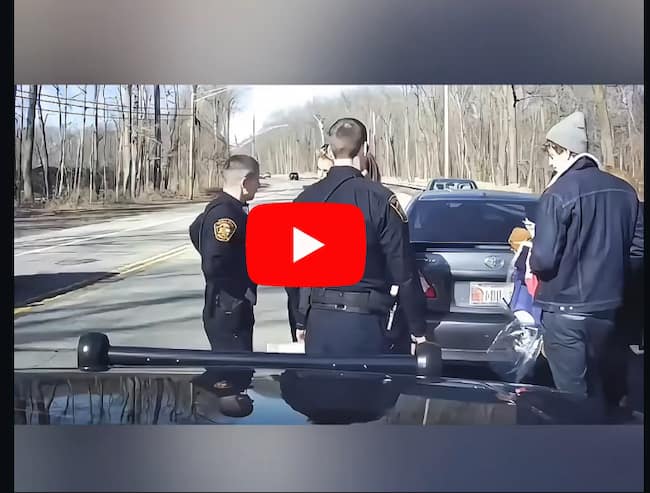
On March 31, 2018, a routine traffic stop on Route 9W in Tenafly, New Jersey became one of the most widely watched dashcam videos in the country — and ultimately ended the public career of Caren Turner, a commissioner of the Port Authority of New York and New Jersey. The Caren Turner traffic stop is now studied as a textbook example of how ethics rules apply to public officials, even off the clock.
How the Traffic Stop Began
Tenafly police officers Matthew Savitsky and Tom Casper pulled over a Toyota Corolla for tinted front windows and a partially obscured license plate. During the stop, the officers found the vehicle’s out-of-state registration had expired and the driver could not provide valid proof of insurance. Following standard procedure, they arranged for the car to be impounded. No one was arrested, and the adult occupants were told they were free to arrange a ride home.
One passenger — Turner’s adult daughter — called her mother for a pickup. When Turner arrived, the dashcam footage shows the encounter changing tone. She presented her official Port Authority badge, identified herself as a commissioner, and repeatedly demanded explanations the officers had already provided to the driver. At one point she insisted on being addressed as “Commissioner” rather than “Miss,” and used profanity toward one of the officers. Throughout the roughly 15-minute exchange, both officers remained calm and did not alter their handling of the stop.
What the Law Says About Using Public Office
New Jersey’s Conflicts of Interest Law prohibits public officials from using — or attempting to use — their official position to secure unwarranted privileges or advantages for themselves or others. This applies even when an official is off duty and even when no favor is actually granted; the attempt itself can be a violation.
The impound itself was also legally routine. A vehicle with an expired registration and no verifiable insurance generally cannot be driven away lawfully, and towing it is standard practice in most New Jersey departments. Officers are also under no legal obligation to explain a stop to third parties who arrive at the scene — only to the driver involved.
The Outcome
The Tenafly police chief forwarded the dashcam footage to the Port Authority, which opened an internal review. Turner resigned her board seat in April 2018, shortly before the video became public. Days later, the Port Authority Board of Commissioners voted unanimously to formally censure her, describing her conduct as “profoundly disturbing,” and referred the matter to the New Jersey State Ethics Commission. In October 2018, Turner agreed to a $1,500 civil penalty under a consent order. She was never criminally charged, and she stated publicly that she had not sought special treatment.
What Changed Because of This
The incident led to real policy reform. In August 2019, New Jersey enacted a law barring agencies such as the Port Authority and NJ Transit from issuing police-style badges to non-law-enforcement board members and officials — closing the loophole that allowed a civilian appointee to carry a gold badge that could be mistaken for police credentials.
The Tenafly stop is a reminder that ethics rules for public officials follow them everywhere, and that a single recorded interaction can carry lasting institutional consequences.
What do you think — should any civilian government official be issued a badge at all?
Frequently Asked Questions
What happened to Caren Turner after the traffic stop?
She resigned from the Port Authority board in April 2018, was unanimously censured by the board, and later agreed to pay a $1,500 fine to the New Jersey State Ethics Commission.
Was Caren Turner charged with a crime?
No. Tenafly police filed no charges against her. The consequences she faced were professional and administrative: resignation, formal censure, and a civil ethics penalty.
Why was the car impounded in the first place?
- The vehicle had an expired out-of-state registration and the driver could not provide valid proof of insurance, so under standard procedure it could not be legally driven and was towed.

Frenzy valentine is a passionate blogger, developer, and entrepreneur. He is the founder and author of myfreshgists.com.