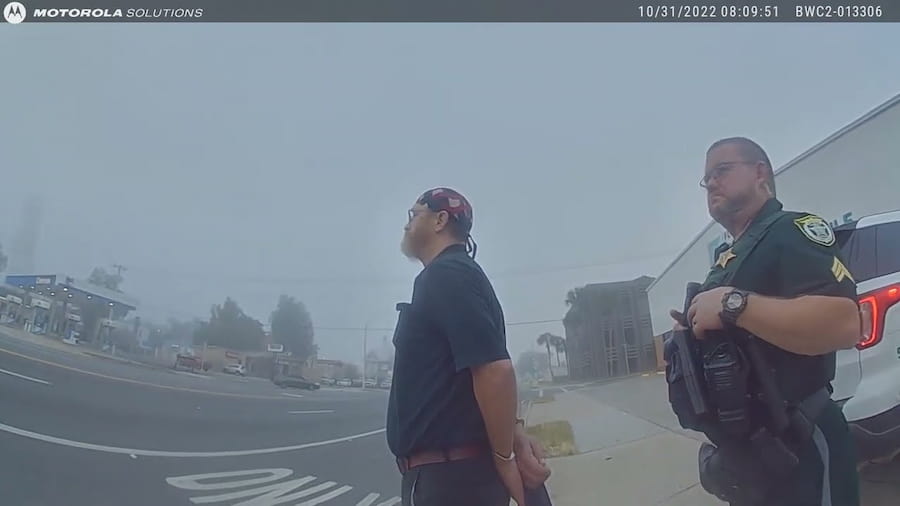
James Hodges lost his sight in 1995 and served in the Navy anyway. On Halloween morning in 2022, he was walking home through Lake City, Florida, after jury duty got canceled, when a deputy stopped him over the object in his back pocket. She thought it was a pistol.
It was his cane. Hodges pulled it out and showed her, a red and white collapsible cane, the kind blind people use to feel the pavement ahead. That should have ended it. Instead, the stop kept going.
The Arrest
When the deputy asked for ID, Hodges pushed back. Her suspicion was that he had a gun. He had just shown her he didn’t. So why, he asked, did he have to identify himself now? It was a fair question, and legally a sharp one. Officers generally can’t demand your ID unless they reasonably suspect you’re involved in a crime, and the only suspicion here had just folded up in his hand.
A sergeant named Randy Harrison arrived and didn’t see it that way. On the bodycam, after Hodges keeps asking for names and badge numbers, Harrison cuts him off: “You know what, put him in jail for resisting.” Hodges was handcuffed, searched, and booked for resisting an officer without violence. He spent 26 hours in a cell.
What the Footage Changed
Hodges filed a complaint and asked for the bodycam video. Once it was released, it spread fast, because it showed something the arrest report didn’t: a blind man calmly explaining himself, then being jailed for asking questions. Prosecutors dropped every charge on November 7, one week after the arrest.
Columbia County Sheriff Mark Hunter apologized publicly and called the conduct unacceptable. The deputy who made the stop drew a two-day suspension. Harrison, who ordered the arrest, was demoted, suspended for seven days without pay, and blocked from raises or promotions for two years. Both had to retake civil rights training.
Why It Mattered Beyond Lake City
Hodges sued, and the case settled out of court. But the footage outlived the lawsuit. In 2025 it became the centerpiece of a national investigative series called “Blind Justice,” which traced a pattern of officers reading disability, blindness, deafness, autism, as defiance or threat. A cane looks like a weapon. A hearing aid looks like earbuds someone won’t remove. Silence looks like resistance.
That’s the quiet lesson in the Hodges tape. Nobody in it is a monster. A deputy made a snap judgment, a supervisor backed it instead of checking it, and a man who had already survived losing his sight lost a day and a night of his life to a mistake that a few seconds of listening would have prevented.
Hodges has said the lawsuit is one of the things he’s proudest of. Blind since a violent attack nearly thirty years ago, he came out of it, he said, still willing to turn the lights on.

Frenzy valentine is a passionate blogger, developer, and entrepreneur. He is the founder and author of myfreshgists.com.