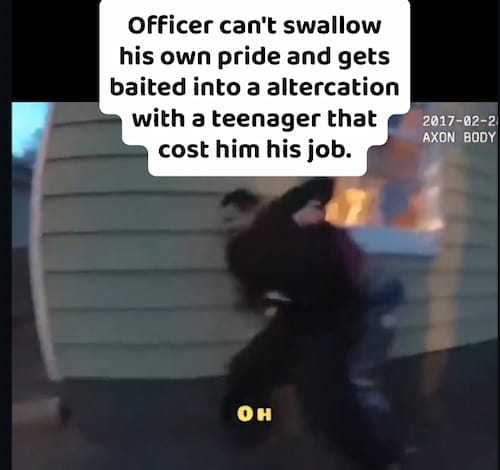
In February 2017, a Springfield, Illinois police officer responded to a routine domestic disturbance call and left the scene having committed a crime — one captured on two body cameras, reported by his own backup officer, and later confirmed by a jury. The Samuel Rosario case became a widely studied example of how official misconduct laws hold police to a higher standard, and why one officer’s decision to fight a 19-year-old ended his career permanently.
The Call That Turned Into a Crime
Officer Rosario, then 32 and on the force for about two years, was dispatched to a home on Springfield’s east side to investigate a domestic disturbance. There he encountered Robert Humes, a 19-year-old resident who was not the subject of the call. Humes was verbally hostile, criticizing police and arguing with the officer.
Rather than disengaging, Rosario responded in kind. Bodycam footage shows him taunting Humes, telling him he wasn’t going to use his taser or mace — he was going to “give you these hands.” According to the findings later entered in federal court, the confrontation turned physical when Rosario shoved Humes, then took him to the ground and punched him repeatedly — nearly a dozen times by news accounts of the footage. Humes was never arrested or charged with anything.
The Accountability Chain
What happened next moved unusually fast. A backup officer who witnessed the fight but did not participate reported it to a supervisor that same evening. The Springfield Police Department requested that the Illinois State Police conduct an outside criminal investigation, and by the next morning, Rosario was under arrest, charged with battery and official misconduct. The department revoked his police powers, placed him on unpaid leave, and fired him that May — releasing the body camera footage publicly at the same time.
What “Official Misconduct” Means
The charges in this case illustrate something many people don’t realize about how the law treats police officers. The battery itself was a misdemeanor, because Humes’s injuries were minor. But because Rosario committed that battery while performing his official duties, Illinois law added a second charge: official misconduct, a felony. In August 2019, a jury convicted him of both. Had he been a civilian throwing the same punches, he would have faced only the misdemeanor — the felony exists precisely because the law holds someone exercising state authority to a higher standard. The conviction permanently disqualifies him from working in law enforcement.
The Aftermath
Rosario was sentenced to 24 months of probation. Humes later filed a federal civil rights lawsuit against Rosario, the police chief, and the City of Springfield; the court dismissed the claims against the city and chief but found in Humes’s favor on liability against Rosario himself. The footage, viewed millions of times, is still used in discussions of de-escalation training and peer intervention — in large part because the accountability began not with the video going viral, but with a fellow officer reporting what he saw.
The case remains one of the clearest police accountability examples on record — proof that the legal consequences for misconduct in uniform can extend well beyond losing the job.
The backup officer reported his partner the same night — should departments formally require officers to intervene during an incident, not just report it afterward?
Frequently Asked Questions
What happened to Officer Samuel Rosario?
He was fired by the Springfield Police Department in May 2017, convicted by a jury of battery and felony official misconduct in August 2019, and sentenced to 24 months of probation. The felony conviction permanently bars him from police work.
Was the 19-year-old charged with a crime?
No. Robert Humes was never arrested or charged in connection with the incident. He later filed a federal lawsuit and prevailed on liability against Rosario.
Why was a fistfight a felony for the officer?
The battery itself was a misdemeanor because the injuries were minor, but committing it while performing official police duties added a felony official misconduct charge under Illinois law — a higher standard that applies specifically to public officials.

Frenzy valentine is a passionate blogger, developer, and entrepreneur. He is the founder and author of myfreshgists.com.