
The United States Geological Survey has released a detailed assessment highlighting substantial undiscovered oil and gas resources in the Permian Basin Province spanning Texas and New Mexico. This evaluation estimates mean totals of 1.6 billion barrels of technically recoverable oil and 28.3 trillion cubic feet of natural gas in the Woodford and Barnett shales. These findings emphasize the ongoing potential of the Permian Basin for enhancing US energy independence and could shape future exploration strategies, market dynamics, and policy decisions.
Key Insights from USGS Permian Basin Oil and Gas Assessment in Woodford and Barnett Formations
The 2026 USGS report concentrates on the Woodford and Barnett Shale formations within the broader Permian Basin Province. Utilizing a geology-based assessment methodology, experts analyzed geological data, historical production, and current technological capabilities to estimate these resources. The fully risked mean for undiscovered oil stands at 1,625 million barrels, ranging from 470 million to 2,928 million barrels across different scenarios. For natural gas, the mean reaches 28,259 billion cubic feet, with estimates varying from 8,098 to 51,706 billion cubic feet. The assessment also accounts for 813 million barrels of natural gas liquids, adding significant economic value to the undiscovered oil and gas in Woodford and Barnett shales.
These numbers reflect undiscovered yet technically recoverable resources in Permian Basin, accessible with existing technology under projected economic conditions. Distinct from proved reserves that are already mapped and viable, these projections indicate untapped potential requiring additional drilling and development. Since the late 1990s, the Woodford and Barnett shales have yielded about 26 million barrels of oil, but this new USGS Permian Basin assessment suggests far greater volumes await discovery.
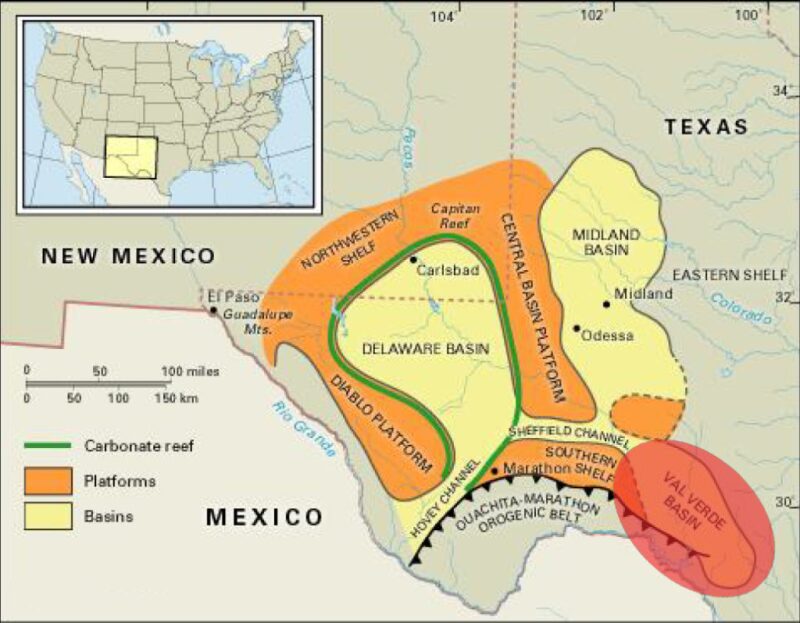
Geological Details and Location of Undiscovered Resources in Texas and New Mexico Permian Basin Province
The Permian Basin ranks among the world’s most productive hydrocarbon regions, encompassing large areas of West Texas and southeastern New Mexico. The organic-rich Woodford and Barnett shales lie at depths up to 20,000 feet, deeper than many other layers in the basin. This depth previously limited access, but recent advancements have made extraction viable. Characterized by continuous resource distribution, these formations hold hydrocarbons spread throughout the rock, ideal for unconventional methods in assessing undiscovered continuous oil and gas resources.
Formed during the Paleozoic era from ancient marine sediments high in organic content, these shales transformed over eons into oil and gas through natural heat and pressure. The USGS divided the region into nine assessment units, blending continuous and conventional resources for a thorough overview. This mapping aids in pinpointing high-potential areas where rock properties like porosity and permeability optimize production in the Permian Basin Woodford and Barnett shales.
Role of Technology in Accessing Undiscovered Oil and Gas in Permian Shale Formations
Innovations such as hydraulic fracturing and horizontal drilling are crucial for tapping into these deep resources. These techniques generate fracture networks in tight shale, freeing trapped hydrocarbons. Horizontal wells extend miles sideways, increasing exposure to resource-rich rock. Paired with advanced seismic imaging and data analytics, operators can precisely target zones, improving efficiency in developing technically recoverable oil and gas in Permian Basin.
The Permian Basin’s production has been transformed by these tools, positioning it as a major supplier of US crude. Multi-well pads minimize environmental footprint while boosting yields. As technology evolves and costs decline, the appeal of these undiscovered resources grows, encouraging investment in Woodford Shale oil reserves and Barnett Shale natural gas estimates.
Economic Impact and Energy Security from New USGS Discovery in Permian Basin
Economically, this USGS assessment of undiscovered oil and gas could attract billions in capital, generating jobs in exploration, infrastructure, and related sectors. Texas, a frontrunner in energy output, will see amplified benefits, including royalties and economic multipliers for local communities. On a national scale, these resources advance energy security by lessening import dependence and stabilizing prices during global fluctuations.
At prevailing consumption levels, the oil could sustain the US for about ten weeks, and the gas for ten months. This strengthens reserves and supports energy-intensive industries like manufacturing and power generation. Natural gas liquids further contribute to petrochemical production, essential for everyday materials. The impact of new oil finds in Permian Basin extends to broader economic stability.

Environmental Factors and Long-Term Outlook for Permian Basin Oil and Gas Development
Despite the promise, extracting these resources poses environmental challenges. Fracking demands large water quantities, which could stress supplies in dry West Texas. Methane leaks from gas operations fuel climate concerns, leading to demands for better regulations and capture systems. Companies are shifting toward sustainable practices, such as water recycling and emission tracking, to reduce effects.
In the energy transition era, the Permian’s natural gas acts as a transitional fuel with lower emissions than coal. The USGS notes these estimates are probabilistic and may shift with emerging data or innovations. Research into methods like CO2 injection could enhance recovery while supporting carbon storage, balancing growth with sustainability in what does USGS assessment mean for Texas oil production.
This breakthrough solidifies the Permian Basin as a vital pillar of US energy strategy. Through prudent development, it can foster economic gains while tackling environmental issues, promoting a sustainable path for future resource management.