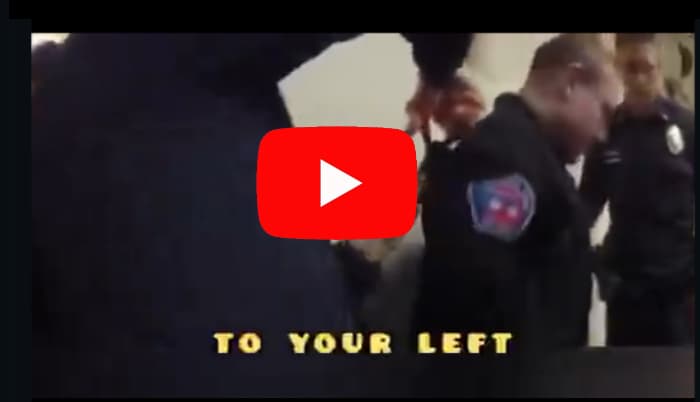
In February 2020, a senior Albuquerque Police Department officer arrived at a substation for his shift and left in handcuffs. The arrest of Jeffrey Wharton — captured on body camera as fellow officers removed his duty belt and cut away his uniform — became one of the most widely viewed police accountability videos of that year, and the case ended with a guilty plea and a sentence that is still debated.
The Investigation Behind the Warrant
The case began at Wharton’s home in Rio Rancho, New Mexico. According to investigators, a doorbell camera at the residence captured the then-31-year-old officer dragging his girlfriend into the house. She was hospitalized with severe injuries, including a brain bleed serious enough that she was transferred from the first hospital to the University of New Mexico Hospital for specialized care.
Rio Rancho police obtained a felony warrant. Because Wharton was due to report for duty, detectives met him at an Albuquerque substation before his shift began and took him into custody there. The released footage shows officers securing his firearm and duty belt and cutting off his uniform shirt during the process. Wharton resigned from APD, where he had served since 2010, immediately after the arrest.
Why a Different Department Made the Arrest
One detail in this case reflects a deliberate safeguard: the investigation and arrest were handled entirely by the Rio Rancho Police Department, not by Wharton’s own agency. When an officer is accused of a crime, the investigating agency is typically the one with jurisdiction over where the offense occurred — and keeping the case outside the accused officer’s department helps avoid conflicts of interest, real or perceived.
The removal of his uniform and equipment also serves practical purposes. An arrested officer cannot be booked into custody carrying weapons, and department credentials, badges, and patches are agency property that could create serious security risks inside a detention facility.
The Outcome
A judge initially ordered Wharton held without bail as a danger to the community, though he was later released pending trial. He ultimately pleaded guilty to aggravated battery. In 2021, he was sentenced to three years of probation, having already spent six months in jail following his arrest. The sentence drew public discussion, with critics noting he received no prison time despite the severity of the injuries.
The case is frequently cited in conversations about how the justice system handles crimes committed by law enforcement officers — both as an example of swift institutional accountability at the arrest stage and as a data point in the debate over sentencing outcomes.
Do you think three years of probation and six months in jail fit this offense, or should the sentence have been longer?
If you or someone you know is experiencing domestic violence, the National Domestic Violence Hotline is available 24/7 at 1-800-799-7233.
Frequently Asked Questions
What happened to Jeffrey Wharton?
The former Albuquerque police officer was arrested in February 2020 on domestic violence charges, resigned from the department, pleaded guilty to aggravated battery, and was sentenced to three years of probation after six months in jail.
Why was his uniform cut off during the arrest?
Arrested officers cannot be booked into custody with weapons or department credentials. Officers secured his firearm and duty belt and removed his uniform, which is agency property, before he was taken to jail.
Why did Rio Rancho police arrest an Albuquerque officer?
The offense occurred at his home in Rio Rancho, giving that department jurisdiction. Having an outside agency handle the case also avoids conflicts of interest within the accused officer’s own department.

Frenzy valentine is a passionate blogger, developer, and entrepreneur. He is the founder and author of myfreshgists.com.