World Report | May, 2026 | Breaking International News | 7-min read
BREAKING · GLOBAL DISPATCH · MAY, 2026
ISIS Leader Killed in Nigeria, Ebola Kills 80 in DRC, Hamas Commander Dead, Eurovision Boycotts Rock Vienna & Pentagon Pulls 5,000 Troops from Europe
By World News Desk · May 16–17, 2026 · Sources: BBC · Reuters · WHO · Africa CDC · IDF · US AFRICOM · Pentagon
Five stories. One day. US and Nigerian commandos take out ISIS’s global number-two in Borno State. Ebola spreads through gold-mining zones in eastern DRC. Israel kills a senior Hamas commander during a fragile ceasefire. Five European nations walk out of Eurovision in Vienna. And the Pentagon silently cancels thousands of troops headed to Poland and Germany. Here is your sharp, verified breakdown of everything that matters right now.
In This Report
- US–Nigeria Kill ISIS Global Second-in-Command Abu-Bilal al-Minuki
- Ebola Outbreak 2026: 246 Cases, 80 Deaths in DR Congo’s Ituri Province
- Israel Eliminates Hamas Qassam Brigades Commander Izz al-Din al-Haddad
- Eurovision 2026 Boycott: Spain, Ireland, Netherlands, Iceland & Slovenia Walk Out
- Pentagon Pulls 5,000 Troops from Germany, Cancels Poland Deployment
1. US and Nigeria Kill ISIS Global Second-in-Command Abu-Bilal al-Minuki in Borno State Raid
Joint commandos storm a fortified compound — and eliminate the man Trump called “the most active terrorist in the world”
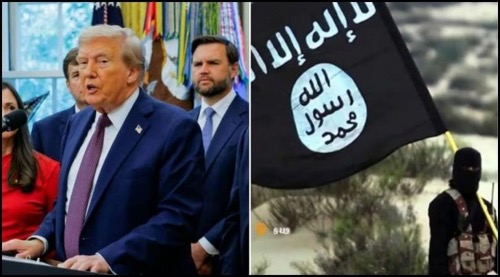
US special operations forces and Nigerian commandos launched a precise raid on a fortified compound in Borno State, Nigeria, and killed Abu-Bilal al-Minuki — the man the Islamic State relied on to coordinate terrorist operations across the globe. President Trump confirmed the strike Friday evening, calling al-Minuki ISIS’s “director of global operations” and the group’s second-highest-ranking leader worldwide.
The raid dismantles ISIS’s operational nerve center in West Africa — and sends an unmistakable message across the Sahel.
Nigerian President Bola Tinubu praised the joint strike as a “flawless operation,” and US Africa Command confirmed that the assault also neutralized several other high-value ISIS targets in the same compound. Security analysts describe the kill as one of the most significant blows to ISIS’s global command structure since the death of Abu Bakr al-Baghdadi.
The operation demonstrates how deeply US and Nigerian counter-terrorism cooperation has evolved. Rather than a unilateral American mission, this raid reflects a Nigerian-led intelligence picture with US special operations support — a model Washington increasingly prefers across the Sahel and Lake Chad basin, where ISIS-West Africa Province has dramatically expanded since 2021.
Experts warn, however, that leadership decapitation rarely dismantles a network permanently. ISIS has a proven track record of elevating successors quickly. The broader strategic question: does this strike slow the group’s push into coastal West Africa — Ghana, Togo, Benin, and Côte d’Ivoire — or does al-Minuki’s successor accelerate recruitment to avenge him?
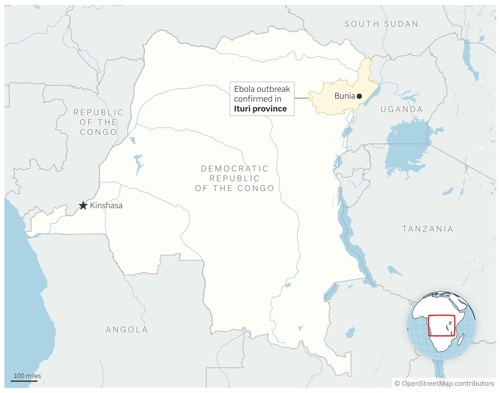
2. Ebola Outbreak 2026: 246 Suspected Cases and 80 Deaths Surge Through DR Congo’s Ituri Province
The Bundibugyo strain spreads through remote gold-mining zones — and one case has already crossed into Uganda
| Metric | Figure |
|---|---|
| Suspected cases | 246 |
| Deaths reported | 80 |
| Lab-confirmed cases | 13 |
| DRC outbreaks since 1976 | 17th |
| Confirmed cross-border cases | 1 (Uganda — contained) |
| Ebola strain | Bundibugyo |
Health officials confirmed the outbreak on Friday after a nurse in Bunia died displaying classic hemorrhagic fever symptoms. Lab tests confirmed Ebola, genomic analysis pointed to the Bundibugyo strain, and contact tracers discovered the virus had already spread deep into the gold-mining communities of Mongwalu and Rwampara — places defined by dense worker populations, constant movement, and virtually no paved roads.
One confirmed case already crossed the Ugandan border — and was contained. For now.
The Africa CDC reports 246 suspected cases and at least 80 deaths, though experts caution that the true toll almost certainly runs higher. Only 13 cases have received laboratory confirmation so far — a direct consequence of the logistical nightmare in one of the world’s most conflict-scarred regions. Armed groups control key road corridors, making supply convoys targets, and communities exhausted by years of violence often distrust outside health teams.
Imperial College London epidemiologists flag that Bunia and Rwampara function as urban transit hubs, meaning the virus carries genuine cross-border risk into Uganda and South Sudan. The African CDC placed both countries on high alert. International partners — WHO, MSF, GAVI — are now rushing Ebola vaccine doses and trained rapid-response teams into Ituri Province.
This marks the DRC’s 17th Ebola outbreak since 1976. The country has beaten back every previous outbreak. The question is whether it can do so again without a ceasefire that gives health workers safe passage through active conflict zones.
3. Israel Kills Hamas Qassam Brigades Commander Izz al-Din al-Haddad in Precision Gaza City Strike
The IDF eliminated one of the chief architects of the October 7 attacks — during a fragile, ongoing ceasefire
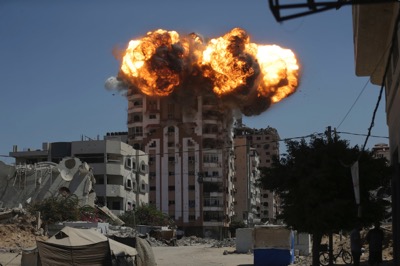
Israeli forces struck a location in Gaza City on Saturday and killed Izz al-Din al-Haddad, the highest-ranking field commander remaining in Hamas’s Qassam Brigades. Hamas confirmed his death. The Israel Defense Forces called the operation a “precise strike” and described al-Haddad as one of the key planners behind the October 7, 2023 massacre that killed approximately 1,200 Israelis and triggered the Gaza war.
The timing carries enormous significance. The strike happened while a ceasefire technically holds and while indirect reconstruction negotiations between Israeli and Palestinian representatives continue in Qatar. Israeli officials argue that targeted strikes on active military commanders never fall under ceasefire protections. Hamas and several mediating governments disagree sharply, and the killing will likely test whether the fragile quiet survives the weekend.
Al-Haddad ranked among the last senior military figures Hamas had left — his death reshapes what remains of the organization’s command structure.
Israel has now eliminated virtually the entire top tier of Hamas military and political leadership throughout this conflict, including Yahya Sinwar, Mohammed Deif, and Ismail Haniyeh. The persistent campaign raises a question that Israeli security officials themselves openly debate: does decapitation of Hamas’s leadership create a vacuum that moderate forces can fill, or does it fragment the organization into smaller cells that prove even harder to eliminate and negotiate with?
4. Eurovision 2026 Grand Final Opens in Vienna — Five Countries Stage Largest Boycott in Contest History Over Israel
Spain, Ireland, Netherlands, Iceland, and Slovenia all walk out — yet Israel reaches the final, and the show goes on
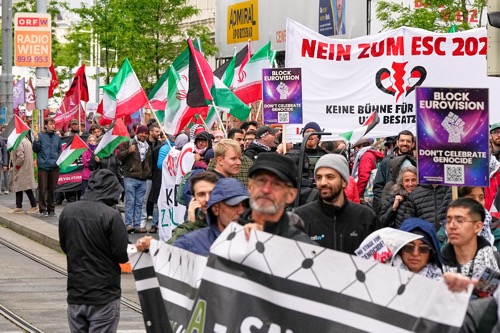
The 70th Eurovision Song Contest kicked off its Grand Final in Vienna tonight, but the drama backstage completely eclipsed what happened on stage. Spain, Ireland, the Netherlands, Iceland, and Slovenia all pulled out of the 2026 competition — the largest coordinated walkout in the contest’s history — to protest the European Broadcasting Union’s decision to allow Israeli broadcaster Kan to compete despite the ongoing Gaza conflict.
| Country | Broadcaster | Reason Stated |
|---|---|---|
| Spain | RTVE | Protest Israel’s participation amid Gaza conflict |
| Ireland | RTÉ | Called continued participation “unconscionable” |
| Netherlands | Avrotros | Cited “severe human suffering in Gaza” |
| Iceland | RÚV | Israeli participation caused “discord among EBU members” |
| Slovenia | RTV SLO | Solidarity with other boycotting broadcasters |
Five countries. The biggest Eurovision boycott in more than 50 years. And the show still goes on.
The EBU rejected calls to put Israel’s exclusion to a member vote back in December, confirming that 35 countries will compete in 2026 — slightly fewer than Basel’s 37, bolstered partly by the returns of Bulgaria, Romania, and Moldova. Despite the five absences, Israel qualified for the Grand Final.
Vienna police deployed heavy security around all venues this week and prepared for large-scale pro-Palestinian demonstrations, several of which drew thousands of protesters. Amichai Chikli, Israel’s Minister of Diaspora Affairs, called the boycotts proof of “a sharp, coordinated antisemitic campaign” against the country’s participation.
For Eurovision’s organizers, the fundamental tension remains unresolved: a contest that markets itself as “united by music” must now explain to a global audience why geopolitical conflict keeps finding its way inside the arena. Viewership figures from tonight will tell the real story — whether the boycott damaged the brand, or simply generated more attention than the songs themselves ever could.
5. Pentagon Pulls 5,000 Troops from Germany and Cancels 4,000-Soldier Deployment to Poland in Sweeping Europe Drawdown
Defense Secretary Hegseth orders the withdrawal — and Trump hints that Italy and Spain could be next
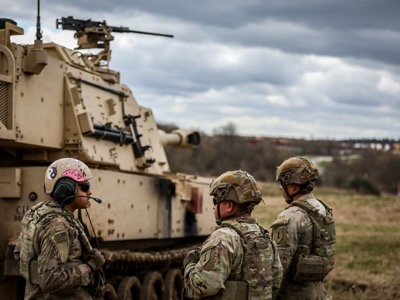
The Pentagon announced Friday that it will withdraw roughly 5,000 US troops from military bases across Germany over the next six to twelve months — and simultaneously canceled the planned deployment of approximately 4,000 soldiers from the 1st Cavalry Division’s 2nd Armored Brigade Combat Team to Poland. Defense Secretary Pete Hegseth ordered both moves after what the Pentagon described as a “thorough review of force posture in Europe.”
| Location | Action | Troops Affected |
|---|---|---|
| Germany | Withdrawal ordered (6–12 months) | ~5,000 |
| Poland | Deployment canceled (1st Cavalry Division) | ~4,000 |
| Italy / Spain | Under consideration (Trump statement) | TBD |
| Germany (remaining) | Still stationed post-drawdown | >30,000 |
More than 30,000 US troops will still remain in Germany after the drawdown — but Europe’s allies are asking what comes next.
The political trigger appears to be a public feud between President Trump and German Chancellor Friedrich Merz. Merz openly criticized the US-Israeli conflict with Iran last week, calling the situation “ill-conceived” and suggesting Washington had been “humiliated” in Tehran. Trump reacted furiously, and the troop withdrawal announcement followed within days. The Pentagon insists the decision stems from a genuine strategic realignment — not political punishment.
European allies scrambled to respond. German Defense Minister Boris Pistorius called the withdrawal “anticipated” and pledged that Germany — already on track to spend over 3% of GDP on defense — stands ready to shoulder more responsibility. Polish President Karol Nawrocki publicly declared Poland “ready” to receive troops redirected from Germany, but the Pentagon made no such offer.
The broader NATO picture darkens further when you factor in weapon shipment delays. The Pentagon simultaneously informed the UK, Poland, and Lithuania to expect delays in weapons deliveries as the US restocks its own depleted munitions stockpiles. Ukraine — already running short of Patriot air defense interceptors and HIMARS ammunition — faces the sharpest consequences. Trump indicated he is also considering further cuts in Italy and Spain, telling reporters plainly: “Yeah, I probably will — why shouldn’t I?” NATO Secretary General Mark Rutte sidestepped direct questions at a Bucharest press conference, noting only that “the US presence in Europe remains vast and massive.” Inside NATO headquarters, that framing satisfies nobody.
Frequently Asked Questions
Who was Abu-Bilal al-Minuki and why does his death matter?
Abu-Bilal al-Minuki served as the second-in-command of ISIS globally and its director of worldwide operations. President Trump described him as “the most active terrorist in the world.” US and Nigerian forces killed him in a compound raid in Borno State, Nigeria. His death removes one of the most operationally experienced figures in ISIS’s hierarchy and disrupts the group’s coordination across West Africa, the Sahel, and beyond — though analysts warn that ISIS consistently replaces its leaders rapidly.
What is the Ebola outbreak situation in DR Congo in May 2026?
As of May 16, 2026, the Africa CDC reports 246 suspected Ebola cases and at least 80 deaths in Ituri Province, concentrated in the Mongwalu and Rwampara health zones near the Ugandan border. Genomic testing points to the Bundibugyo strain. Lab confirmation has only reached 13 cases so far due to remote terrain and active conflict. One case crossed into Uganda and health teams contained it. International response teams with vaccines and contact tracers are now on the ground.
Who is Izz al-Din al-Haddad and what role did he play in Hamas?
Izz al-Din al-Haddad led Hamas’s Qassam Brigades as its most senior remaining field commander and played a key planning role in the October 7, 2023 attacks on Israel. The IDF killed him in a targeted strike in Gaza City on May 16, 2026. His death continues Israel’s systematic effort to eliminate Hamas’s entire military leadership throughout the conflict.
Which countries boycotted Eurovision 2026 and why?
Spain, Ireland, the Netherlands, Iceland, and Slovenia all officially boycotted Eurovision 2026 in Vienna to protest the EBU’s decision to allow Israel to compete during the Gaza war. Their withdrawals represent the largest collective boycott in the contest’s history. Despite the five absences, 35 countries still compete in the 2026 contest.
How many US troops is the Pentagon withdrawing from Europe in 2026?
The Pentagon withdraws approximately 5,000 troops from Germany over six to twelve months and canceled a separate 4,000-soldier deployment to Poland. This reverses part of the Biden-era military buildup that followed Russia’s full-scale Ukraine invasion in 2022. More than 30,000 US troops still remain in Germany after the drawdown. President Trump suggested further reductions in Italy and Spain remain possible.
What does the US troop withdrawal mean for NATO’s eastern flank?
NATO allies in Eastern Europe — particularly Poland, the Baltic states, and Romania — worry that reducing US rotational forces weakens deterrence against Russia. Poland spends roughly 4.7% of GDP on defense, the highest share in NATO, and Polish leaders publicly offered to host troops relocated from Germany — but Washington declined. Compounding the concern, the Pentagon simultaneously delayed weapons shipments to the UK, Poland, and Lithuania while it replenishes stockpiles depleted during the Iran conflict.
What is the Bundibugyo Ebola strain and how dangerous is it?
Bundibugyo is one of four Ebola species known to infect humans, first identified in Uganda in 2007. It carries a lower fatality rate than the more common Zaire strain — historically around 25–40% compared to Zaire’s 50–90% — but it still kills a significant proportion of those infected. Like all Ebola species, it spreads through direct contact with an infected person’s bodily fluids, making healthcare workers particularly vulnerable and safe burial practices essential to stopping transmission.
Is the Ebola outbreak in DRC 2026 a risk to people outside Africa?
The immediate risk outside Africa remains very low. During the 2013–2016 West African Ebola crisis — nearly 30,000 cases — only a handful of cases reached Europe, and none caused sustained local transmission. The current risk to Uganda and South Sudan is higher due to geographical proximity and shared population movement. Experts at Imperial College London note that global risk stays low as long as border health checks and rapid containment measures remain active.
Which story grabs you most right now? Drop your thoughts in the comments, share this post with friends who follow global news, and subscribe for fresh weekly international roundups straight to your inbox.
Why AI Stocks Are Fueling the Biggest Market Rally in History — And Why This Is Only Just Beginning
Sources (May, 2026): BBC News · Al Jazeera · Reuters · WHO · Africa CDC · Imperial College London School of Public Health · Israel Defense Forces · US Africa Command (AFRICOM) · Pentagon Press Briefings · NPR · Time · Euronews · CBC · CNN · Associated Press

Frenzy valentine is a passionate blogger, developer, and entrepreneur. He is the founder and author of myfreshgists.com.