Global trade has entered a new and far more unpredictable era. The tariffs introduced in 2026 are not just another round of trade friction — they represent a structural shift that is forcing every major automaker, including Toyota, to completely re-evaluate its entire business model. Toyota, long celebrated for its lean manufacturing and resilient global supply chain, is now facing challenges that go far beyond short-term cost increases. The company is being compelled to rethink where it builds cars, how it sources components, how it prices its vehicles, and even which markets it should prioritize in the coming decade. This is not a Toyota-only problem. The entire global auto industry is experiencing the same painful awakening, and the lessons emerging from this crisis will influence corporate strategy across multiple sectors for years to come.
Why Tariffs Are Hitting the Auto Industry Harder Than Most Sectors
The automotive industry is uniquely vulnerable to tariffs because of its extreme level of global integration. A single modern vehicle can contain parts sourced from more than 30 different countries. Engines may come from Japan, transmissions from Germany, electronics from South Korea, steel from Brazil, and assembly may happen in multiple locations before the final product reaches the customer. When governments suddenly impose or raise tariffs on steel, aluminum, semiconductors, finished vehicles, or key components, the cost structure of every car changes dramatically overnight. Toyota, which has built its reputation on just-in-time manufacturing and highly efficient cross-border supply chains, is feeling this disruption more acutely than many of its competitors. The company has already warned investors that the new tariffs could add several hundred dollars to the production cost of every vehicle sold in affected markets. For an industry that typically operates on profit margins of 5 to 8 percent, this kind of sudden cost increase is extremely difficult to absorb without raising prices or cutting corners elsewhere.
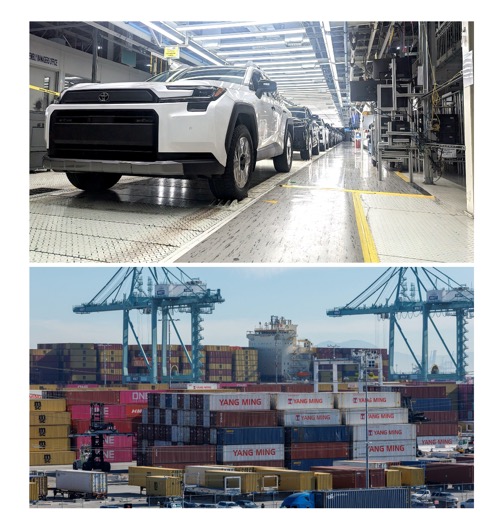
Toyota’s Strategic Dilemma and Unprecedented Response
For decades, Toyota followed a clear philosophy: build cars where they are sold and source parts from the most efficient suppliers worldwide. This approach allowed the company to maintain high quality while keeping costs competitive. However, the 2026 tariff environment has broken that formula. Toyota executives have publicly described the current situation as “uncharted territory.” The company is now actively exploring several major strategic shifts that would have been unthinkable just a few years ago. These include moving more production closer to major consumer markets such as North America and Europe, even if it means higher labor costs. Toyota is also accelerating efforts to diversify its supplier base away from countries most exposed to tariff risks and is considering redesigning certain vehicle platforms to reduce reliance on globally sourced components. These decisions are not short-term fixes. They represent fundamental changes that will shape Toyota’s operations for the next 10 to 15 years. The company has acknowledged that some of these moves will initially increase costs, but executives believe they are necessary to protect long-term competitiveness and resilience.
The Broader Auto Industry Is Scrambling in Similar Ways
Toyota is far from alone in facing this challenge. Ford, General Motors, Volkswagen, Hyundai-Kia, Stellantis, and nearly every other major automaker are implementing their own versions of the same strategic rethink. Many companies are accelerating plans to “nearshore” or “friendshore” production — moving manufacturing closer to home or to politically aligned countries. General Motors, for example, has announced expanded investment in its North American plants. Volkswagen is fast-tracking new facilities in the United States and Mexico. European automakers are increasing production in Eastern Europe and North Africa to reduce dependence on Asian supply chains. The electric vehicle transition, already complex and capital-intensive, has become even more challenging as tariffs raise the cost of batteries, rare earth minerals, and electronic components. Smaller tier-one and tier-two suppliers are particularly vulnerable. Many are struggling to survive as their largest customers demand immediate price reductions while facing higher input costs themselves. This cascading pressure is creating a wave of consolidation in the supplier base that will reshape the industry for years.
Historical Context: How Previous Crises Shaped the Industry
The auto industry has faced major disruptions before, but the current tariff situation is different in both speed and scale. During the 1970s oil crises, automakers had to rapidly redesign vehicles for better fuel efficiency. The 2008 financial crisis forced a painful restructuring and consolidation. The 2011 Fukushima disaster exposed vulnerabilities in just-in-time supply chains. However, none of those events required companies to fundamentally question the entire model of globalized production the way tariffs are forcing them to do today. The difference now is that the disruption comes from government policy rather than market forces or natural disasters. Policy changes can be sudden, unpredictable, and long-lasting. This has made strategic planning far more difficult and has forced companies to build much greater flexibility into their operations than ever before.
Key Lessons Every Global Business Must Learn
The tariff crisis is delivering several hard but valuable lessons that extend well beyond the auto industry:
First, over-reliance on any single region or country for critical components is extremely dangerous. Toyota’s experience demonstrates that even the most sophisticated and efficient global supply chain can be severely disrupted by sudden policy changes. Companies that had already begun diversifying their supplier bases are now in a much stronger position.
Second, speed and agility have become more important than ever. The companies that can quickly shift production locations, change suppliers, redesign products, or adjust pricing strategies will survive and thrive. Those that move slowly risk losing significant market share to more agile competitors.
Third, government policy must now be treated as a core strategic risk rather than a background issue. Leading companies are establishing dedicated teams to monitor trade policy developments, model different scenarios, and develop contingency plans. This level of attention to geopolitics was once reserved for the most senior executives. It is now becoming a standard part of corporate governance.
Fourth, nearshoring and friend-shoring are rapidly becoming the new normal. While these strategies often increase short-term costs, they significantly reduce long-term risk. Many companies are willing to accept slightly higher production costs in exchange for greater stability and predictability.
The End of Hyper-Globalization and the Rise of Regionalized Supply Chains
The 2026 tariff shock is accelerating a trend that was already visible before the current crisis: the gradual end of hyper-globalization. For more than three decades, companies chased the lowest possible costs by spreading operations across the entire planet. That era is now coming to a close. In its place, we are witnessing the rise of “regionalized globalization” — a model in which companies maintain global reach but build stronger, more resilient supply chains within trusted geographic regions. This shift will affect everything from where cars are designed and built to how much they ultimately cost consumers and which models are available in different markets. The companies that adapt to this new reality fastest will enjoy a significant competitive advantage throughout the rest of this decade and beyond.
Implications for Investors and the Broader Economy

For investors, the tariff-driven transformation of the auto industry creates both risks and opportunities. Companies with diversified production footprints, strong balance sheets, and proven ability to adapt quickly are likely to outperform. Those with heavy exposure to single regions or inflexible supply chains face greater uncertainty. The broader economy will also feel the effects. Higher vehicle prices could dampen consumer spending in the short term. However, the long-term shift toward more localized production could create new manufacturing jobs in North America and Europe while reducing some of the extreme volatility that has characterized global supply chains in recent years. The transition will not be smooth, but it is likely to result in a more stable and resilient global auto industry over time.
What the Future Holds for Toyota and the Global Auto Sector
Toyota has survived and thrived through multiple major crises over its 80-plus year history. The company’s culture of continuous improvement (kaizen) and its famous ability to learn from setbacks give it a strong foundation for navigating the current challenges. While the road ahead will be difficult and some short-term pain is inevitable, history suggests Toyota will emerge from this period with an even more robust and adaptable business model. The same is true for the broader auto industry. The companies that treat the 2026 tariff crisis as a genuine wake-up call rather than a temporary inconvenience will be the ones best positioned to succeed in the new era of global business. Those that attempt to return to old ways of operating will likely struggle.
Why AI Stocks Are Fueling the Biggest Market Rally in History — And Why This Is Only Just Beginning
The tariffs of 2026 are forcing Toyota and the entire auto industry to rethink everything from supply chains to strategy. But they are also creating a rare opportunity for forward-thinking companies to build more resilient, sustainable, and competitive operations for the decades ahead. The lessons learned during this difficult period will echo through boardrooms around the world for many years to come. The companies that understand and embrace this new reality will be the ones that lead the global auto industry into the 2030s and beyond.

Frenzy valentine is a passionate blogger, developer, and entrepreneur. He is the founder and author of myfreshgists.com.